
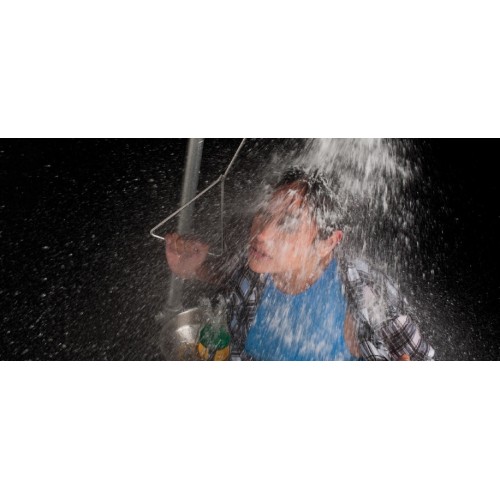
HAWS CORPORATION EMERGENCY EQUIPMENT - PREORDER
- Product Code: HAWS CORPORATION EMERGENCY EQUIPMENT - PREORDER
- Product SKU:
- Availability: Pre-Order
|
MODEL |
DESCRIPTION |
||||||||||||||||||||||||
| |||||||||||||||||||||||||
|
MODEL |
DESCRIPTION |
||||||||
|
| |||||||||
|
PARTS
& ACCESSORIES |
|
|
| |
|
9040 |
Modesty curtain for the
8605WC |
|
9070 |
Filter for eyewashes |
|
9070C |
Cartridge for filter |
|
SP154DPDT |
Double pole-double throw
flow switch, CSA Class 1 Div 1, brass material |
|
SP154DPDTSS |
Double pole-double throw
flow switch Stainless Steel CSA Class 1 Div 1 |
|
SP154DPDT IECEX |
Double pole-double throw
flow switch, IECEX Ex d, brass material |
|
SP154DPDTSS IECEX |
Double pole-double throw
flow switch with Stainless Steel, IECEX Ex d |
|
SP158B |
Freeze protection valve |
|
SP176 |
Universal emergency body
spray sign |
|
SP177 |
Universal emergency shower
sign |
Emergency showers and eyewashes are required by the ANSI/ISEA Z358.1‐2014 standard to be
activated weekly, with a more thorough evaluation on an annual basis. With OSHA fine
increases of 80 percent having taken effect in August 2016, violations for inappropriate or
inadequate eyewash and shower equipment have resulted in penalties of more than $100,000.
The standard guides the placement, functionality, and maintenance requirements for
emergency showers and eyewashes. ANSI/ISEA Z358.1, in its current form, is the clearest and
most useful tool for protecting workers from eye, face, and bodily injuries resulting from caustic
and corrosive materials introduced by workplace incidents such as spills, splashes, and blown
particulates.
The standard requires stringent testing to be conducted on a regular basis to ensure properly
functioning equipment is being provided at all times if an incident were to occur. We should all
understand that compliance is not a once‐a‐year or once‐a‐month responsibility. Compliance is
an all‐day, every‐day requirement. Accordingly, emergency showers and eyewashes are
required by the ANSI/ISEA Z358.1‐2014 standard to be activated weekly, with a more thorough
evaluation on an annual basis. This requirement is established in Sections including 4.6.2, 4.6.5.
In practice, emergency response equipment such as eyewashes and showers sometimes fall to
the wayside when it comes to maintenance, especially when prioritized against emergency
preparedness equipment such as eye protection and fall protection. You should know that OSHA
does not prioritize or take a backseat when it comes to providing adequate and properly
functioning equipment, regardless whether the equipment aids pre‐ or post‐incident.
ANSI Weekly Minimum Performance Requirements
The standard itself has three minimum requirements for weekly inspections:
1. Emergency equipment shall be activated weekly. (Each piece of equipment is required to
be activated.)
2. Activation shall ensure flow of water to the head(s) of the device. (This would be both the
eyewash or eye/face wash head, as well as the showerhead.)
3. Duration of the activation shall be sufficient to ensure all stagnant water is flushed from
the unit itself and all sections of piping that do not form part of a constant circulation
system, also known as "dead leg" portions. (The duration is determined by the length of
piping where stagnant water could be sitting before it reaches the head(s) of the unit.)
In addition to the above weekly minimum performance checklist required by ANSI/ISEA, it
is recommended as a best practice to conduct additional weekly functional checks. The purpose
of these additional checks is to fully ensure the equipment is operating correctly and is capable
of providing proper first aid in the event of an emergency.
ACCESS
Path of travel to the safety station shall be free of obstructions. (This could include hoses,
boxes, and doors.) (Sections 4.5.2, 5.4.2, 6.4.2, 7.4.2)
SHOWER
Shower must deliver a minimum of 20 gallons (75.7 L) per minute. (Sec. 4.1.2, 4.1.4, 7.1)
The valve shall go from “off” to “on” in one second or less and flushing fluid shall remain
on without the use of operator’s hands. (Sec. 4.2, 7.1)
EYEWASH/EYE/FACE WASH
Outlets shall be protected from airborne contaminants. (Dust covers must be in place.)
(Sec. 5.1.3, 6.1.3, 7.1)
The valve shall go from “off” to “on” in one second or less and flushing fluid shall remain
on without the use of operator’s hands. (Sec. 5.2, 6.2, 7.2)
The flushing fluid of an eyewash or eye/face wash shall cover the areas between the
interior and exterior lines of a gauge at some point less than 8 inches (20.3 cm) above the
eyewash nozzle. (sec 5.1.8, 6.1.8,7.1)
Must provide a means of a controlled flow to both eyes simultaneously at a velocity low
enough to be non‐injurious. (Sec. 5.1.1, 6.1.1, 7.1)
COMBINATION UNIT
Combination unit components shall be capable of operating simultaneously. (When the
eyewash or eye/face wash is activated, and then the shower is activated, there should be
no “starvation” occurring to either of the heads.) (Sec. 7.3, 7.4.4)
TEMPERATURE
Deliver tepid flushing fluid. (The required temperature range is 60°F ‐ 100°F [16°C ‐
38°C])(Sec. 4.5.6, 5.4.6, 6.4.6, 7.4.5)
Plumbed Shower and Eyewash Equipment
As a general statement, all equipment needs to be inspected weekly to ensure that there is a
flushing fluid supply and that the equipment is in good repair. If the equipment is of a plumbed
design, then it should also be activated weekly to clear the supply line of any sediment
buildup and to minimize any microbial contamination due to stagnant water.
Self‐Contained Eyewash and Shower Equipment
Self‐contained, also often referred to as "portable," emergency response equipment is typically
used in locations where there is either no access to water or at highly mobile sites where
hazards are mobile. The ANSI/ISEA requirement for this type of equipment is to be visually
inspected weekly to determine whether the flushing fluid needs to be exchanged or
supplemented (Sections 4.6.3 and others). The units should be maintained as per the
manufacturer’s specific model instructions.
A majority of self‐contained units that use potable water also offer a sterile bacteriostatic
additive option to prevent the water from growing bacteria. An exchange of the water and refill
of the additive is required every three months for most additive products, as well as rinsing the
unit clean between the exchanges. If an additive is not being used, then the water should be
exchanged on a weekly basis, at a minimum, with a thorough tank cleaning monthly. On an
annual basis, self‐contained units are required to undergo the full test just as plumbed units do.
The question is often asked whether a company must hire a certified tester to conduct the
weekly and annual inspections. Fortunately, there are no prerequisite or certification
requirements to be able to test the equipment, although having a complete understanding of
the installation and performance requirements will aid in ensuring conformance. There are
various training tools, including Online Competent Inspector Training, offered by equipment
manufacturers and others for individuals to become subject‐matter experts. This allows
company personnel to get familiar with what to look for and how to conduct the tests
appropriately. Many companies today opt to have an outside third‐party inspection performed
for them annually, which provides an added measure of credibility and assurance to the review
process.
Facilities that contain hundreds of shower and eyewash units should strive to create as many
subject‐matter experts as possible. Once trained, the weekly checks can be completed rather
quickly. Creating facility maps, having full testing kits available, and holding recurring training
classes can assist in the tedious yet crucial weekly task.
Worker protection should be a priority in every safety plan. Simply providing emergency
showers and eyewashes is not enough. It is necessary to inspect, test, and monitor equipment
readiness and performance for the optimal response.
ISSA / IMPA CODE:
560601, 560602, 560603, 560611, 560612, 560621
53 06 21 Emergency Shower Station - Drench Shower Free Standing
| 530601 | DRENCH SHOWER HORIZONTAL SUPPL PASTIC SHOWER HEAD | 应急洗眼器 |
| 530602 | DRENCH SHOWER VERTICAL SUPPLY PASTIC SHOWER HEAD | 防化喷淋器, 垂直安装 |


