
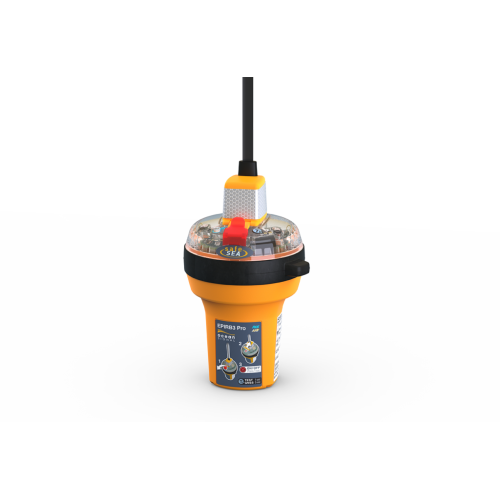
OCEAN SIGNAL ** EPIRB3 Pro: Category 1 EPIRB with AIS, RLS, and NFC Mobile Connectivity

  • Product Code: EPIRB3 Pro
  • Product SKU:
  • Item Code: GMDS-OSN-E3PRO-
  • Availability: In Stock

**OCEAN SIGNAL SAFESEA EPIRB3 PRO, 702S-03933

CAT 1 ARH, CLASS 2, AIS AND RLS

ORIGIN:  UK

** Programming Details required - NAME OF VSL / MMSI NO / CALL SIGN / PORT OF REGISTRY upon ordering

EPIRB3 Pro: Category 1 EPIRB with AIS, RLS, and NFC Mobile Connectivity

  • 406MHz & 121.5MHz Signals
  • Integrated AIS Alert
  • Visible Light and IR Strobe
  • Multi GNSS
  • MEOSAR Compatible
  • Return Link Service (RLS Capable)


The new Ocean Signal EPIRB3 Pro is a full featured 406 MHz global rescue beacon that comes with an auto release float free bracket and packs a host of features into a compact modern design which includes AIS technology. AIS provides local rescuers precise and reliable information on the current beacon position, thereby speeding rescue operations. Additionally, Return Link Service (RLS) comforts those who activate the beacon by confirming that their distress message has been received. The inclusion of Near Field Communication (NFC) capability allows use of a smartphone app to monitor the EPIRB’s battery and other functions ensuring it is working properly. With its slim design and advanced features, the EPIRB3 Pro is ideal for a variety of mariners whether they are cruising the med, heading out through the straights for a passage, fishing, working, or sailing offshore.

  •  Approved for use on SOLAS vessels
  • 30%(typ) smaller
  • AIS distress alert
  • Return Link Service (RLS)
  • Mobile connectivity utilizing Near Field Communication (NFC)
  • Free App (Apple & Android)
  • 10 year battery life
  • 48+ hours operational life
  • 5 year warranty
  • Fast accurate positioning with 72 channel GPS
  • Category I auto release float free bracket
  • Secure lanyard
  • UK Approved ‘Red Ensign’ marked marine equipment

https://oceansignal.com/products/epirb3-pro/#certificates


EPIRB3 Pro_RLS Cospas Sarsat Certificate (TAC1362)


EPIRB3 Pro_nonRLS Cospas Sarsat Certificate (TAC362)


EPIRB3 Pro Wheelmark (EU MED) Type Examination Certificate


EPIRB3 Pro Wheelmark (EU MED) Declaration of Conformity


EPIRB3 Pro MED Module D QA Certificate


EPIRB3 Pro UK MER Module D QA Certificate


EPIRB3 Pro UK MER Declaration of Conformity


EPIRB3 Pro UK MER Module B Type Examination Certificate


EPIRB3 Pro CCS Type Approval (China)

Ocean Signal’s new Category I and II AIS Emergency Position Indicating Radio Beacons (EPIRB) are approved in the U.S. and will be introduced to U.S. boaters for the first time at this year’s Miami International Boat Show. These new Category I and II AIS EPIRBs are shipping and now available.

Combining the power of the latest safety technologies, the next generation Cospas-Sarsat certified Ocean Signal rescueME EPIRB3 and safeSEA EPIRB3 Pro units have now received the equipment authorization from the U.S. Federal Communications Commission (FCC) and approval from the U.S. Coast Guard.

The beacons significantly increase the speed of location and aid for survivors in an emergency, enhancing the chance of rescue for recreational and commercial users, whether cruising, fishing, working or sailing offshore.

The EPIRB3 is available with a Category II manual release bracket. The EPIRB3 Pro comes with the Category I auto release, float-free bracket providing full IMO regulatory compliance for SOLAS vessels.

Carried by a vessel, an EPIRB (Emergency Position Indicating Radio Beacon) is traditionally activated in a life-threatening event, such as sinking, medical emergencies, collision and accidents, to transmit a 406 MHz distress signal via the Cospas-Sarsat satellite system to contact global rescue services.

Ocean Signal’s new slim, lightweight beacons, with 10-year battery life, include GNSS (Global Navigation Satellite System) positioning, 406 MHz Cospas-Sarsat distress signal with MEOSAR compatibility and 121.5 MHz local homing signal. The EPIRB3 series is compatible with Return Link Service alerting technology and can provide confirmation that the international satellite system has received a distress message and location.

By incorporating AIS within its beacons for the first time, Ocean Signal can now offer EPIRB3 owners the extra reassurance that other nearby vessels will also be alerted in an emergency. A distress signal will be received by all ships, boats and aircraft equipped with AIS in the vicinity, enabling them to respond with immediate assistance. The EPIRB3 has an infrared strobe, as well as visible light, to facilitate rescue in poor visibility or at night.

The EPIRBs also feature NFC (Near Field Communication) technology for use with the free Ocean Signal mobile app, delivering a new way for beacon owners to monitor their beacons, review self-test results, view GNSS test locations, and monitor beacon performance and maintenance.

Free Programing

Please provide us the following information:

1. Vessel Name

2. IMO No.

3. MMSI No.

4. Flag


The Emergency Position-Indicating Radio Beacon (EPIRB) allows vessels to be located quickly and accurately in times of distress. Singapore-registered ships must register their EPIRB with MPA.

Today's technology takes most of the 'search' out of search and rescue through the utilisation of satellites and modern radio distress beacons. Under the COSPAS-SARSAT international satellite-aided tracking system, polar orbiting satellites are able to detect distress signals from radio beacons.

Mariners call their beacons EPIRBs (Emergency Position Indicating Radio Beacons). An EPIRB is designed to float in water with its antenna pointing upright. and is required to operate for a minimum of 48 hours continuously once activated

The technology of distress beacons is so advanced that the location of the boat, aircraft or individual in distress can be calculated to a search area of around 20km with an analogue 121.5 MHz beacon and further reduced to a search area of as little as 110m with a digital 406 MHz beacon, if encoded with GPS.

The 406MHz beacon comes in two basic types: those that provide an encoded (GPS) location and those that do not. The satellite system can calculate a beacon’s location, but locating a distress site is usually much faster if the beacon signal provides a GPS location. Registration is free.

Note: 121.5 MHz distress beacons will no longer be detected by satellite from 1 February 2009. Older 121.5 MHz radio distress beacons, manufactured before 1990, were designed for detection by overflying aircraft, and not by satellite. These beacons are not compatible with the COSPAS-SARSAT system and should be replaced with a digital 406 MHz beacon.

Float-free EPIRBs are held in a bracket and fitted with a hydrostatic release that is water activated, deploying the beacon automatically if the vessel sinks. If the vessel continues to float, then the EPIRB can be manually deployed where a distress situation exists.

In a distress situation, it is important that once a beacon is switched on, you do not switch it off until rescue has been effected or you are advised to do so by the rescue authority.

Where a beacon has been activated inadvertently, the most important thing to do is:

  • Switch off the beacon to ensure that a search and rescue operation is not commenced. There is no penalty for inadvertent activations.
  • Notify the Port Operations Control Centre (POCC) in Singapore, which is the operational headquarters for a maritime SRR that covers both the island of Singapore and over 1 million square kilometres of the South China Sea (see Singapore SRR map).

24-hour emergency contact numbers

  • VHF Channel 16
  • VTIS working channels 7, 10, 14, and 73
  • Tel (+65) 6226 5539 or (+65) 6325 2493
  • Fax: (+65) 6227 9971
  • Telex: 20021

EPIRB registration

Always register your EPIRB.

This will help rescue forces find you more quickly in an emergency. The POCC maintains a database of EPIRBs fitted onboard Singapore-registered ships.

Owners or operators of all Singapore-registered ships must register their EPIRB with MPA by completing and submitting the EPIRB registration form.

If for some reason your beacon gets activated inadvertently, you will receive a call from the Coast Guard. This will avoid unnecessarily engaging SAR resources that may be needed in an actual emergency.

If inadvertent activation is discovered while at sea, the POCC must be informed by the most rapid means of communication, either direct or via another station with passing instructions to urgently forward to the POCC in Singapore.

Testing of EPIRBs should be done at regular intervals and in accordance with the manufacturer’s procedures. Batteries must also be kept in-date and fully charged.

Information about the COSPAS-SARSAT international satellite system can be found at http://www.cospas-sarsat.org.


SATELLITE EPIRB, 406MHZ/121.5MHZ 372511


WHAT IS AN EPIRB OR EMERGENCY POSITION INDICATING RADIO BEACON?

 EPIRB

WHAT IS AN EPIRB OR EMERGENCY POSITION INDICATING RADIO BEACON?

Posted on March 13, 2023

Safe boating is everyone’s responsibility, and there is technology available to commercial and recreational boaters called an Emergency Position Indicating Radio Beacon or EPIRB to alert Search and Rescue teams of your exact location, should the unthinkable ever happen.  Learn everything you need to know about EPIRBs including the new AIS EPIRBs and how they take the Search out of Search and Rescue.

What Does EPIRB Stand For?

EPIRB Stands for Emergency Position-Indicating Radio Beacon.  You may also hear an EPIRB referred to as a GPIRB, this stands for an EPIRB that has an internal GNSS/GPS receiver to pinpoint your location faster.

What Is An EPIRB?

Liferaft with EPIRB

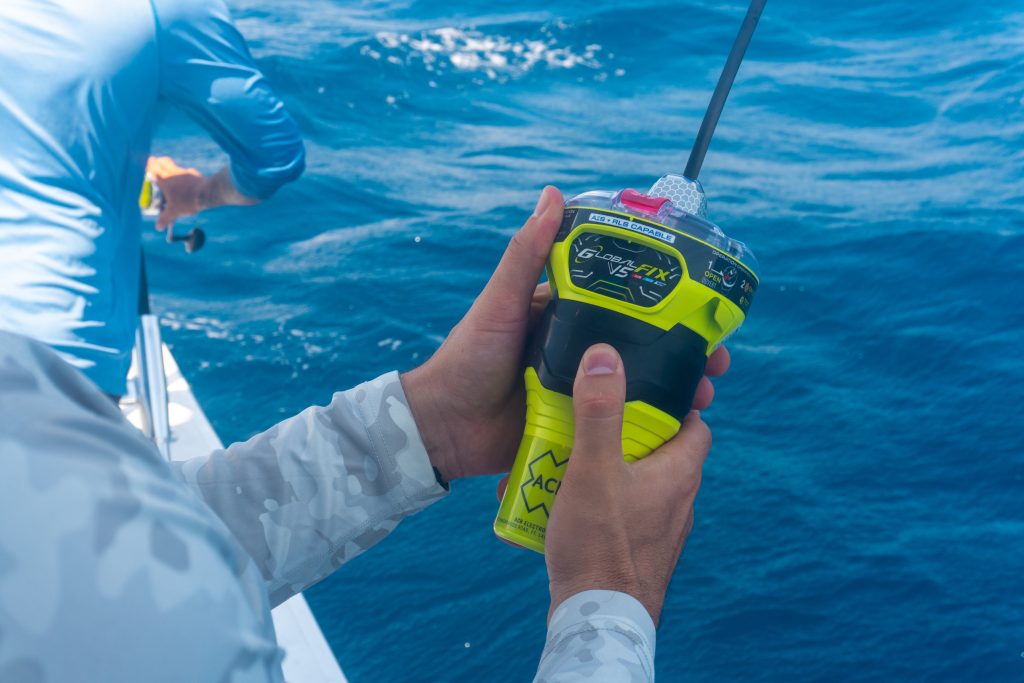
An EPIRB or Emergency Position Indicating Radio Beacon is a distress beacon for boaters that when activated alerts a worldwide Search and Rescue (SAR) network designed to send rescuers to your exact location quickly. 

How Do EPIRBs Work?

EPIRBs transmit a digital 406 MHz distress signal that contains a unique 15-digit identifier to the Cospas-Sarsat Satellite System. Depending on where your vessel is registered this may be a serial number or the vessels MMSI (Maritime Mobile Service Identity) number.

For EPIRBs with a serial number, Search and Rescue forces then pull up your beacon registration (also free, yet mandatory for all EPIRB owners) which tells them who the beacon belongs to as well as provides additional emergency contact information. For EPIRBs with an MMSI number the EPIRB 15 Hex ID should be added to the relevant maritime database.

EPIRBs provide Search and Rescue forces with your location either via GPS data or via triangulation calculations from the satellites. This positional data is provided to the Rescue Coordination Center closest to your location. They in turn embark on your rescue mission and use the EPIRBs 121.5 MHz homing signal, AIS location signal on newer EPIRBs, and strobe lights to ultimately pinpoint your location and bring you home safely.


Newly Approved EPIRBs with AIS

With AIS technology designed into some newly approved EPIRBs, when an EPIRB with AIS is activated, the AIS signal is sent nearby vessels outfitted with an AIS transponder who are then instantly notified of the EPIRB distress and location. Vessels in the area where the EPIRB has been activated can then start rescue and recovery operations immediately without having to wait for emergency response from the applicable Search and Rescue authority. AIS also allows local responders to easily pinpoint the EPIRB’s location which is presented as an AIS target on their onboard display. Nearby vessels with onboard AIS can navigate directly to the EPIRB by selecting the AIS target. This incredible technological advancement will speed recovery times which is sure to save lives.

Key Point: The Cospas – Sarsat Satellite System

The Cospas – Sarsat Satellite System is an international satellite radiolocation system to support search and rescue operations for aviators, mariners, and land travelers in distress.

The Cospas – Sarsat Satellite System is supported by local governments so there are no subscription fees.

  • Worldwide – Over 50,000+ people rescued (since 1982)
  • United States – 10,090 people rescued (since 1982)
AIS EPIRB

What Are The Advantages To An AIS EPIRB?

The main two advantages of switching to an AIS EPIRB are (1) reducing the search radius of your distress to 10 meters, and (2) the ability to send an emergency alert to all AIS equipped vessels in VHF range. Both of these features will aid in saving more boaters lives each year.

What Is Return Link Service or RLS?

Return Link Service (RLS) is a new enhancement to RLS enabled EPIRBs that provides a blue flashing LED light that is a visual confirmation message from Search and Rescue that they have received your emergency distress message. A Return Link Service signal sent back through the Galileo satellite network confirms that the distress message along with the precise beacon location and identifiers have been detected. The comfort of knowing rescuers are aware that an EPIRB has been activated and that they have its location helps reduce the stress associated with mayday situations.


When Should You Activate An EPIRB?

You should only activate an EPIRB when you are grave and imminent danger. When the loss of life, limb, or valuable property is likely without emergency assistance. From a sinking vessel, to a medical emergency onboard while you are out at sea, an EPIRB is a critical piece of your boats safety gear to get you rescued quickly.

How To Use An EPIRB Beacon In Case of Emergency?

EPIRBs can be deployed manually or automatically depending on the bracket category and situation.

An automatic Float Free Category 1 bracket is designed to release an EPIRB when the Hydrostatic Release Unit (HRU) in the bracket is submerged in water to a depth of 4 to 14 feet (1.5 – 4 meters). 

The regulation specifies a range of depth for deployment to allow for different water temperatures which will affect the release depth. The Hydrostatic Release Unit needs to be replaced every two years. In an emergency, the EPIRB will release from its bracket, float to the surface, and alert search and rescue that you need help fast.