
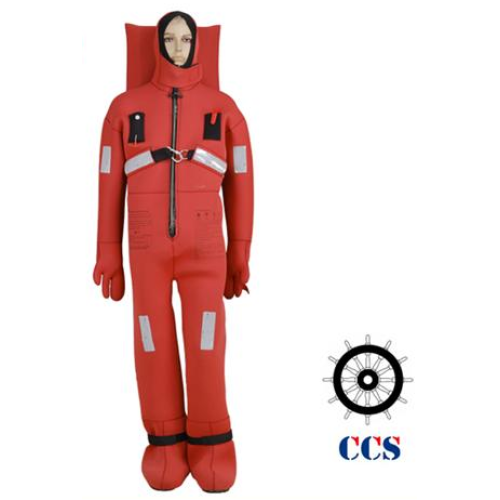
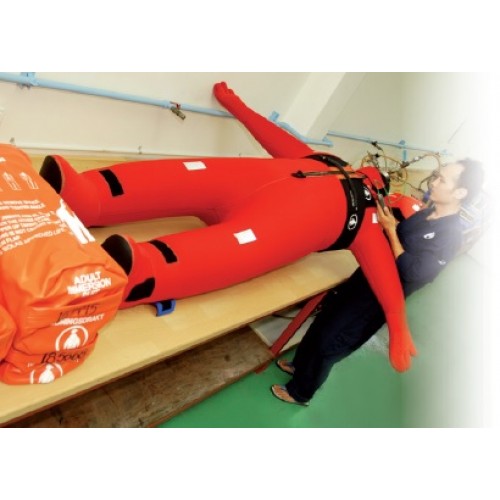
RS, IMMERSION SUIT, SIZE: M (MEDIUM), EC-MED APPROVED
- Product Code: RSF-II (Medium)
- Product SKU:
- Item Code: IMMS-RSG-ECM -
- Availability: In Stock
Jiaxing Rongsheng Lifesaving Equipment Co., Ltd.
RS, IMMERSION SUIT, SIZE: M (MEDIUM), EC-MED APPROVED
C/W: WHISTLE, STAINLESS STEEL HARNESS & CARRYING BAG
MATERIAL: NEOPRENE
MCA/UK Flag approved
Neoprene Immersion Suit solas approval
- Material: NEOPRENE (5mm thickness)
- Pillow: Designed with a buoyancy pillow, No need for extra lifejacket.
- Reflective tape: SOLAS reflective tape,5cm x 10cm
- Zipper: 67cm length water tight zipper with plastic puller.
- Gloves: 3 finger Neoprene gloves
- Belt: black webbing belt with steel D-ring.
- Boots: Neoprene Material with Rubber sole
- Cold Water Neoprene Immersion Suit Accessories: water-proof Light, whistle.
- Weight: 5.0kg
- Buoyancy: >142N
RONGSHENG RSF II,
IMMERSION SUIT, EC-MED APPROVED
C/W: WHISTLE &
LIGHT, STAINLESS STEEL HARNESS & CARRYING BAG
MATERIAL: NEOPRENE (RED)
** CAN BE USED WITHOUT
LIFEJACKET
SIZE: S (SMALL) Height:
150 to 165cm / Chest: 90 - 100cm
SIZE: M (MEDIUM) Height:
165 to 180cm / Chest: 100 – 110cm
SIZE: L
(UNIVERSAL) Height: Up to 195cm / Chest: 110 – 120cm
SIZE: XL (JUMBO) Height:
195 to 205cm / Chest: 120 – 132cm
** SPECIAL UNIT
COST: S$159.00/PCE
## Please advise 'Size'
required, upon ordering
THE IMMERSION SUIT IS DESIGNED TO BE WORN WITHOUT LIFEJACKET
- Hypothermia protection: The suit's primary function is to protect the wearer from hypothermia in cold water by keeping the body dry and insulated.
- High visibility: They are manufactured in bright colors like red or orange with reflective tape to make the wearer highly visible to rescuers.
- Fire resistance: The suits are made of non-flammable material that will not melt or burn for two seconds after being exposed to fire, which is important during a rapid evacuation.
- Easy to don: Suits are designed to be unpacked and put on without assistance in under two minutes, even over other clothing or a life jacket.
- Mobility: They allow for a reasonable degree of mobility, enabling the wearer to climb a ladder, swim a short distance, or board a survival craft.
- Full body coverage: The suit covers the entire body except for the face, with included gloves and boots (or built-in socks) covering the hands and feet.
- Buoyancy: Immersion suits also provide buoyancy, which helps a person flip from a face-down to a face-up position in the water.
- Regulatory requirements: International regulations like SOLAS mandate that a certain number of immersion suits be carried on vessels, depending on their trade area.
- Inspection: Suits must be inspected regularly for any damage to seams, zippers, or other components.
- Servicing: An official service is required every three years, and this interval may decrease after the suit reaches a certain age.
- Immersion suits must be made of non-flammable and waterproof material that will not sustain burning or continuous melting after being totally enveloped in a fire for 2 seconds.
- The suit must be designed to be unpacked and donned without assistance within 2 minutes, including any associated clothing or a lifejacket. It should also allow for sufficient movement to enable the wearer to climb a vertical ladder, perform normal abandonment duties, swim a short distance, and board a survival craft.
- The suit must cover the whole body except for the face, with hands covered unless permanently attached gloves are provided. It should minimize free air in the legs and be able to withstand a jump from a height of 4.5 meters without undue water ingress or injury. The suit must also prevent the body temperature from dropping more than 2 degrees Celsius after 6 hours of immersion in water between 0 and 2 degrees Celsius.
- Immersion suits are typically a internationally RED color for high visibility. The wearer, with or without a lifejacket, must be able to turn from a face-down to a face-up position in no more than 5 seconds.
- Suits should be designed to withstand storage at temperatures between -30°C and +65°C without damage. They are also required to be resistant to oil exposure.
- Immersion suits require monthly inspections and must be serviced at an approved service station every three years, with the interval decreasing to annual service after 10 years from the date of purchase.
Immersion Suit, also names survival suit, is a special waterproof dry suit that protects the wearer from hypothermia in cold water, after abandoning a sinking ship, especially in the ocean. Immersion suit is an important life-saving equipment at the open sea. It can significantly improve survival time in cold water.
An immersion suit is a body covering suit that is worn specifically for the purpose of remaining afloat and surviving during emergencies in high seas. This suit is therefore also known as a survival suit or a rescue suit
Immersion Suit, also names survival suit, is a special waterproof dry suit that protects the wearer from hypothermia in cold water, after abandoning a sinking ship, especially in the ocean. Immersion suit is an important life-saving equipment at the open sea. It can significantly improve survival time in cold water.
2.3.1 General requirements for immersion suits
2.3.1.1 An immersion suit shall be constructed with waterproof materials such that:
.1 it can be unpacked and donned without assistance within 2 min, taking into account donning of any associated clothingfootnote, donning of a lifejacket if the immersion suit must be worn in conjunction with a lifejacket to meet the requirements of paragraph 2.3.1.2, and inflation of orally inflatable chambers if fitted;
.2 it will not sustain burning or continue melting after being totally enveloped in a fire for a period of 2 s;
.3 it will cover the whole body with the exception of the face, except that covering for the hands may be provided by separate gloves which shall be permanently attached to the suit;
.4 it is provided with arrangements to minimize or reduce free air in the legs of the suit; and
.5 following a jump from a height of not le


