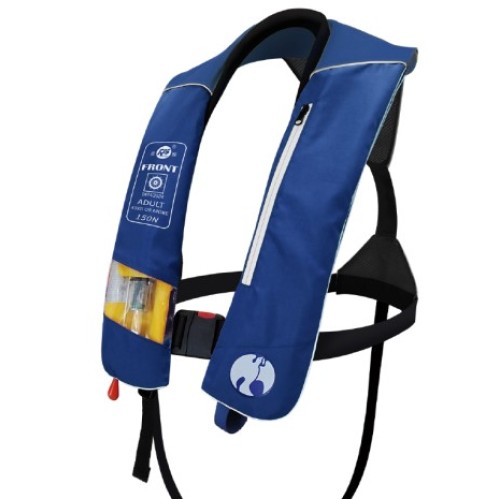
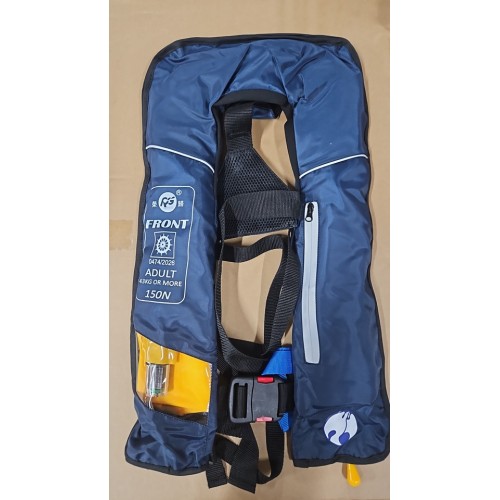
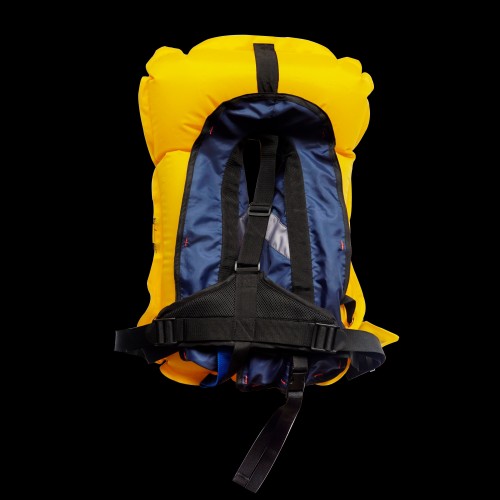
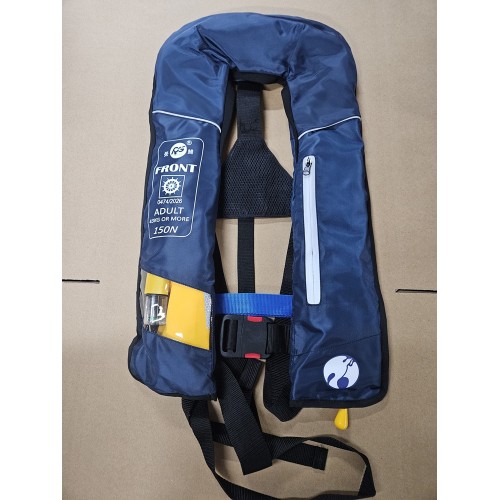
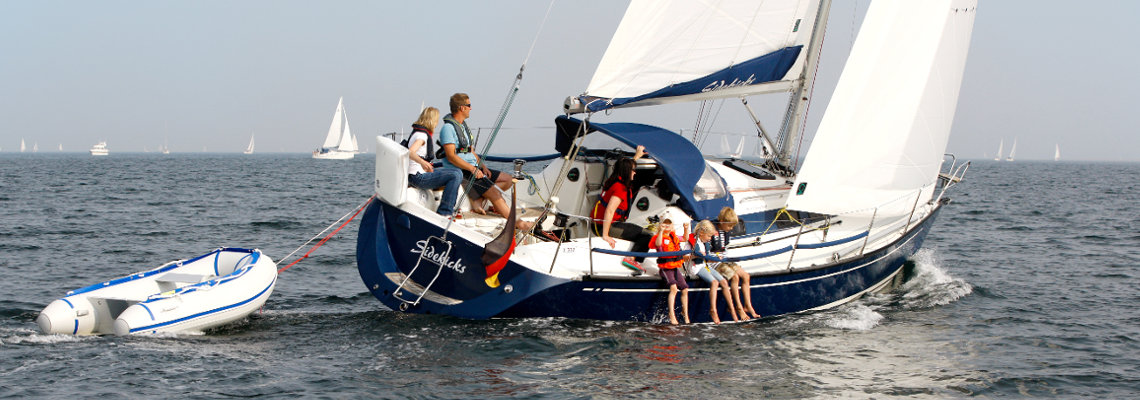
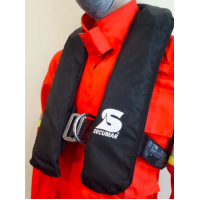
Inflatable life jackets for adults are very safe, low-profile, extremely comfortable, and can be inflated in one of two ways: automatically or manually (you can switch between the two). Ideal for strong swimmers and those who enjoy water sports, these manual and self-inflating life jackets allow you to fish and boat without getting in the way or slowing you down.
Inflatable life jackets for adults are very safe, low-profile, extremely comfortable, and can be inflated in one of two ways: automatically or manually (you can switch between the two). Ideal for strong swimmers and those who enjoy water sports, these manual and self-inflating life jackets allow you to fish and boat without getting in the way or slowing you down.
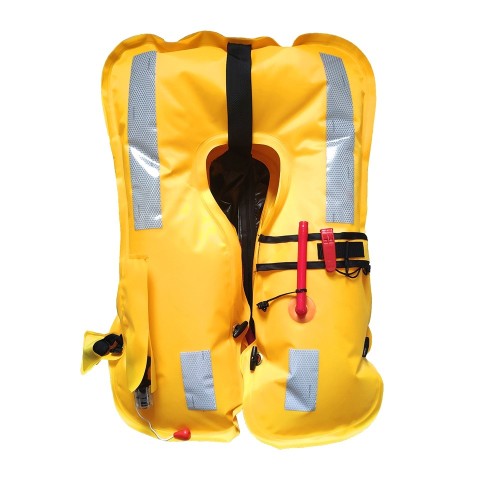
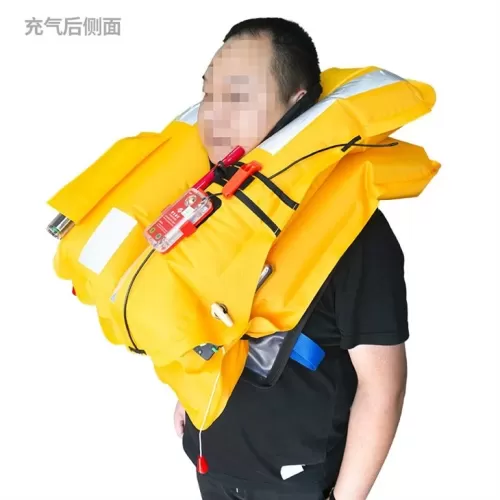
This inflatable life jacke tfor adults has 2 independent air bags, each of which can provide the user with more than 150N of buoyancy. Usually one automatic inflation device and the other manual inflation device. Even if one of the inflators fails, or if one of the air bags ruptures and leaks air, the other air bag can still work perfectly.
Model
RSY-150TS-2
Weight
<1kg
Inflation method
Automatic/Manual
Float duration
≥24h
Inflation time
<5s
Chamber
2
Buoyancy
≥150N
Buoyancy loss after
<5%
Ambient temperature for use
-30℃~+65℃
CERTIFICATE
CCS/EC
SOLAS approval with RINA certificate
Double chamber
Buoyancy:150N buoyancy
Less than 5s inflation time
More than 24h floating duration
Buoyancy loss less than 5% after 24 hours
2 X 33g CO2 cylinder
One automatic inflation device and one manual inflation device
Oral tube
Whistle
SOLAS reflective tape
The WSH Council has released new Guidelines on Personal Flotation Devices - Life Jackets (2025) to enhance safety for workers operating near water. These guidelines detail employer/worker responsibilities, proper selection based on environment (e.g., ISO 12402 standards), and best practices for maintenance, such as using certified equipment and proper storage.
Key Aspects of the New WSH Guidelines:
Purpose: To guide the selection, use, and maintenance of life jackets for workers at risk of drowning.
Key Content:
Selection: Recommends selecting appropriatecertified (ISO 12402 or SOLAS) life jackets based on the work environment (e.g., sheltered vs. non-sheltered waters).
Maintenance: Emphasizes regularpre-use inspections and storage in well-ventilated areas to prevent degradation.
Roles: Outlines responsibilities for employers to provide appropriate equipment and for workers to wear it.
Context: Launched in collaboration with the Maritime and Port Authority of Singapore (MPA) and the Ministry of Manpower (MOM).
What is the Solas
requirement inflatable life jacket?
Double
chamber life jacket - A SOLAS inflatable life jacket is required to have two independent chambers activated by two automatic
firing heads. The Double chamber,
twin-chamber or dual-chamber system offers redundancy. Both firing heads will
activate filling the life jackets with gas
Inflatable life vest
Specifications:
Double Chamber
Inflation Method: Automatic/Manual
Gas Cylinder: 33g * 2
Buoyancy: 150N
Weight Less Than: 1.2kg
Freeboard: More Than 100mm
Inflation Time: Less Than 5 Seconds
Float Duration: More Than 24 Hours
Buoyancy Loss After 24 Hours: Less Than 5%
Ambient Temperature: -30oC ~ +65oC
Certifications:
EC/MED APPROVED
救生衣
Life Jackets
33 01 34
IMPA 330140 INFLATABLE LIFE JACKET, WITH LIGHT AND WHISTLE ATTACHED, ADULT, UK DOT APPROVED
WSH Alert Accident Notification, 26 February 2021: Worker fell off pilot ladder into sea
The industry is reminded to conduct a comprehensive Risk Assessment for all work activities related to vessel embarkation and disembarkation. Precautions must be taken to prevent workers from falling into water. Where possible, always select a safer method (e.g. use of vessel gangways) for embarkation or disembarkation. If pilot ladders must be used, ensure workers are physically fit for the task and sufficiently confident before allowing them to proceed. Safe Work Procedures must be established to guide workers on the safe use of pilot ladders. Employers of workers exposed to the risk of falling into water must provide suitable life vest to keep the workers afloat in the event they fall into the water. Workers should be trained on the importance and correct manner of donning the life vest. Instruct workers not to attempt embarking or disembarking a vessel when conditions are not favourable (e.g. heavy rain, strong winds and/or choppy waters). If conditions are good, then embarking/disembarking may proceed only when the passenger launch is in position.
MARITIME AND PORT AUTHORITY OF SINGAPORE
PORT MARINE CIRCULAR
NO. 034 OF 2020
"In order to prepare for safe transfers, persons are strongly recommended to wear appropriate Personal Protective Equipment (PPE), including a working SOLAS type approved life-jacket or a life-jacket meeting International ISO 12402 - performance level 100, or higher."
•Life jackets: For safe boarding of vessels, the Maritime and Port Authority of Singapore recommends the use of SOLAS type-approved life jacket or a life jacket meeting ISO 12402 Personal Flotation Devices with performance level 100 or higher. Always check that life jackets are in good condition before use.
ISO 12402: INTERNATIONAL STANDARD FOR PERSONAL FLOTATION DEVICES (LIFEJACKETS AND BUOYANCY AIDS)
The ISO 12402 series for personal flotation devices (lifejackets and buoyancy aids) was prepared by the European Committee for Standardization (CEN) Technical Committee CEN/TC 162, Protective clothing including hand and arm protection and lifejackets, in collaboration with Technical Committee ISO/TC 188, Small craft, in accordance with the Agreement on technical cooperation between ISO and CEN (Vienna Agreement).
ISO 12402 consists of the following parts, under the general title Personal Flotation Devices (PFDs):
Part 2: Lifejackets, performance level 275 — Safety requirements
Part 3: Lifejackets, performance level 150 — Safety requirements
Part 4: Lifejackets, performance level 100 — Safety requirements
Part 5: Buoyancy aids (level 50) — Safety requirements
Part 6: Special purpose lifejackets and buoyancy aids — Safety requirements and additional test methods
Part 7: Materials and components — Safety requirements and test methods
Part 8: Accessories — Safety requirements and test methods
Part 9: Test methods
The International Organization for Standardization (ISO) is a worldwide federation of national standards bodies (ISO member bodies). The work of preparing International Standards is normally carried out through ISO technical committees. Each member body interested in a subject for which a technical committee has been established has the right to be represented on that committee. International organizations, governmental and non-governmental, in liaison with ISO, also take part in the work. ISO collaborates closely with the International Electrotechnical Commission (IEC) on all matters of electrotechnical standardization. International Standards are drafted in accordance with the rules given in the ISO/IEC Directives, Part 2.
LSA-Code International Life-saving appliance Code (MSC.48(66))
2.2.2 Inflatable lifejackets A lifejacket which depends on inflation for buoyancy shall have not less than two separate compartments and comply with the requirements of paragraph 2.2.1 and shall:
inflate automatically on immersion, be provided with a device to permit inflation by a single manual motion and be capable of being inflated by mouth;
in the event of loss of buoyancy in any one compartment be capable of complying with the requirements of paragraphs 2.2.1.2, 2.2.1.3 and 2.2.1.4; and
comply with the requirements of paragraph 2.2.1.7 after inflation by means of the automatic mechanism.
The table below summarises the different performance levels of life jackets:
Performance Level
Application and Suitability
100N
·For use in sheltered or calm waters (e.g., swimming pools, rivers, reservoirs, or ponds) and not suitable for rough water condition or when there is wave splash.
·Intended for those who may have to wait for rescue in sheltered orcalm waters.
·Give reasonable assurance of safety from drowning in relatively calmwaters, where users remain capable of helpingthemselves.
·Not guaranteed to self-right an unconscious user and should not be expected to protect the airway of an unconscious person in roughwater.
150N
·For use in general, offshore, rough waters, or foulweather.
·For fully clothed user or heavy weatherclothing.
·Give reasonable assurance of safety to people not fully capable ofhelping themselves due to injury orexhaustion.
·Able to turn an unconscious user into a position where one’s mouth and nose is clear of the water without active participation, but with limitations for wearers of special protective clothing or heavyequipment.
275N
·For use in offshore waters or under severe weather or seaconditions.