
OCEAN SIGNAL safeSEA S200 AIS SART, P/N: 710S-05162
- Product Code: S200
- Product SKU:
-
OCEAN-SIGNAL-safeSEA-S200-AIS-SART-P-N-710S-05162-NOAH-AGENCIES-www.noah.com.sg :

- Item Code: GMDS-OSN-S200 -
- Availability: In Stock
-
OCEAN-SIGNAL-safeSEA-S200-AIS-SART-P-N-710S-05162-NOAH-AGENCIES-www.noah.com.sg :
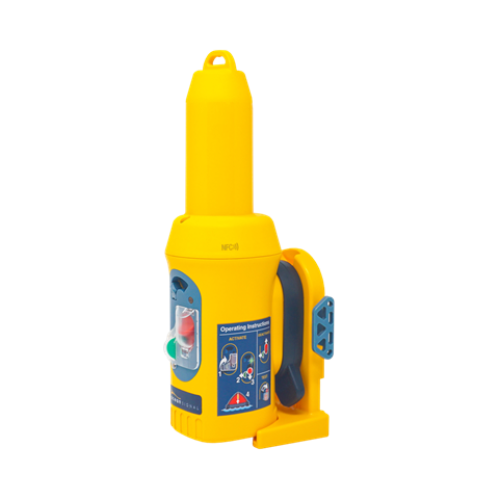
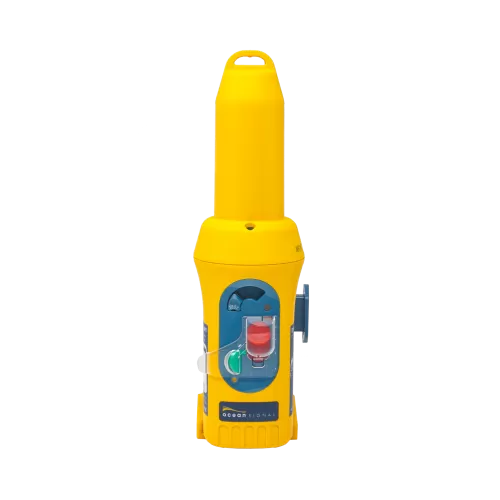
safeSEA S200 AIS SART
The S200 SART is an IMO SOLAS-compliant AIS Search and Rescue Transmitter (SART), providing vessels required to adhere to GMDSS regulations with a reliable solution for meeting mandatory SART carriage requirements. Leveraging AIS class-A position reports, the S200 transmits eight position report messages per minute, enabling real-time tracking in critical situations.
This device has not been authorized as required by the regulations of the FCC. This device is not, and may not be offered for sale or lease, or sold or leased, in the United States until authorization is obtained.
Built on the proven design of the S100, the S200 SART offers enhanced distress alerting through Automatic Identification System (AIS) technology, moving beyond traditional radar-based systems. This cutting-edge device sends precise GNSS/GPS satellite location coordinates to all AIS-equipped vessels within VHF range, ensuring that emergency assistance is rapidly deployed when needed.
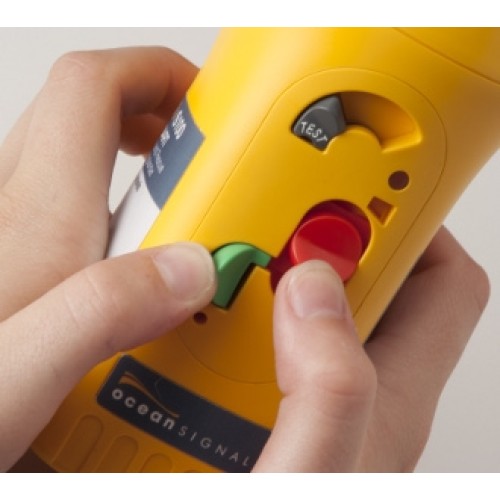
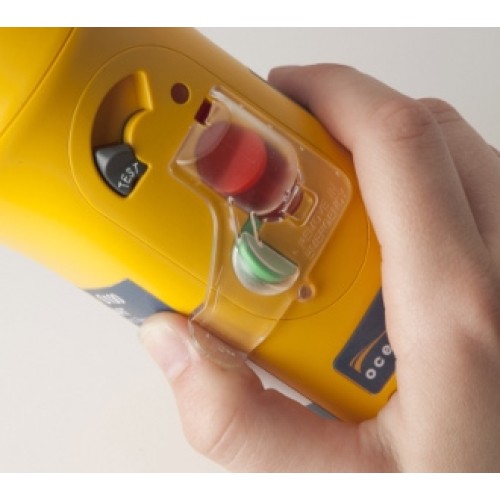
With an average detection range of 5 nautical miles, the S200 integrates Near Field Communication (NFC) technology for easy product registration and test data access. Its high-performance lithium battery delivers up to 96 hours of operating life, ensuring extended reliability in the toughest conditions. The AIS-based system also provides superior performance in adverse weather, with reduced susceptibility to interference from heavy rain or fog.
Designed with convenience in mind, the S200 includes a sleek wall mount for easy access in emergencies. An optional telescopic pole, extending 3.3 feet (1 meter), can be attached for maximum height and visibility when deployed from a life craft, and the SART can be suspended inside the craft for hands-free use.
Built to endure the harshest marine environments, the S200 is a dependable partner in any emergency, ensuring your distress signal reaches any AIS-equipped vessel within range. Its rugged construction guarantees it will be operational when you need it most, providing peace of mind on the water.
Carriage Requirements
- Any IMO SOLAS vessels on international voyages are required to carry a SART
- 300-500 Gross Register Tonnage (GRT) must carry a minimum of 1 SART
- Over 500 Gross Register Tonnage (GRT) must carry a minimum of 2 SARTs
- 1 SART for every four life rafts on Ro-Ro passenger vessels
- Passenger ships of any size must carry a minimum of 2 SARTs regardless of their tonnage
- Lifeboats: SOLAS requires that at least 1 SART be available for use in each survival craft
- Liferafts: In the case of passenger ships, if there are more than 2 liferafts, additional SARTs should be provided so that at least one SART is available for every 2 liferafts.
- Active GPS Transmission: It uses a built-in GNSS/GPS receiver to determine its precise location and transmits safety messages using standard AIS class-A position reports.
- Direct Display: Nearby ships and aircraft equipped with AIS receivers and electronic chart displays (ECDIS) instantly see the distress signal, target ID, and exact coordinates plotted on their screens.
- Range: It has an average detection and transmission range of about 5 to 10 nautical miles, depending on the height of the antenna above sea level.
- Active Transmission: Unlike older radar SARTs that wait to be triggered by a ship's radar, an AIS-SART uses a built-in GNSS/GPS receiver to continuously transmit its exact position.
- Display: Nearby vessels and aircraft equipped with an AIS receiver, ECDIS, or chartplotter instantly see a distinct target (typically a circle with a cross inside) labeled "SART ACTIVE" along with precise latitude and longitude.


